Monday, July 09, 2012

July 2012-UF in Gainesville


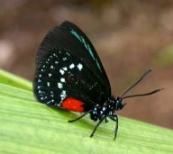
After a serious drop in Atala colony success during the past few years, most likely due to the cold fronts that hit southeast Florida, 2012 looks like bumper crop year for the Atala….our colonies are flourishing, some are self-establishing (good and bad, depending on where they decide to land!) From old data, it is starting to look like the Atala may have a 7-8 boom cycle as well as those twice-yearly crashes and eruptions. Right now, there is definitely an eruption occurring in many locations....better to share the wealth! These neonates are about to join the captive colony here at the University of Florida in Gainesville.

Sadly, though, the bigger news is that many of our other native butterflies are not doing well at all. Schaus Swallowtail surveys on the islands offshore in Biscayne National Park and Key Largo are so dangerously low that the Dr. Jaret Daniels and the University of Florida have received emergency permission from the Federal Government to capture four females for captive breeding. They haven’t been caught yet since only six adults have been seen this year. 

Thanks to Fairchild Tropical Botanic Garden and Montgomery Botanical Center for continued support of the “Atala Re-Introduction II” and to our wonderful NABA volunteers in Miami-Dade, Broward and Palm Beach Counties for being instrumental in getting the butterflies back into home gardens, and to Miami-Dade County and Palm Beach County biologists and park staff for deploying Atalas back into the pinelands and natural areas, where it has lived in southeast Florida.

A special thank you is due to Broward County NABA for handling a few rescues of the aforementioned self-established but unwelcome meta-populations that descended on ornamental coonties in the heavily urbanized environment. Those Atalas are safe and sound in private gardens now where severe herbivory is not frowned upon, but is recognized instead as a sign of successfully nurturing an imperiled species.

Speaking of those home colonies, those survey reports really are more important than one may think. One of the weakest links in any re-introduction program is that we often do not know if the colony survives, simply because we don't have money and staff to re-visit the sites on a regular basis. That is what "Citizen Science" is about. Knowing if your colony is growing, stable, sick, declining, disappeared but came back, never established, remained viable for two years or more: all of these inputs help determine the strength of a re-introduction program....& we can honestly say that we are helping a species survive, if we have numbers and incoming data from many locations. So for all of you who do send in weekly reports, thank you and give yourself a pat on the back. Your input is valuable!

So what am I doing in Gainesville these days? Besides being surrounded with brilliant instructors, and being involved with the McGuireCenter for Lepidoptera and Biodiversity, I am challenged with intense but inspiring class work, and homework…. and too much work in general! I am working 6 ½  days in my lab or next door at USDA, in addition to catching up on data sheets every evening (“Welcome to Grad School” is the call echoing through the halls.) But most importantly, I am studying the Atala, the object of our delight and frustration, every day, all day….literally, which is both amazing and exhausting. Much of what I see in my lab-reared colony is the same as I have seen in wild colonies, which means that they are acting “normally” and the info I am recording is valid. 
 
So this is what I am studying: All the “basic biology”—everyone is numbered so I know who is doing what, and I am recording longevity, sex ratios, development rates in different temperatures and humidity ranges that mimic southeast Florida, mating behavior, and other basic biological factors. I’m looking at herbivory rates, which is certainly one of the primary questions from home owners and park staff: How much foliage do the caterpillars consume (“a lot” is a really good answer, but I’ll have an actual quantity when all this munching is finally finished!)

There are more questions arising that may or may not get answered in the process, but believe me, caring for a captive colony of several hundred Atala larvae and adults is quite a task! (The pupae don’t ask for much but a spritz of “dew” a couple times a day and a way to climb up to the roof to expand their wings when they emerge. The larvae are exceptionally demanding bundles of joy, as are all immature creatures, and the adults are happy if they have their own company, nectar to sip at will, plenty of perching places and free flying space.)

I also have to share an amazing experience that I had in May, thanks to one of our Broward NABA members who introduced me to Bud and Jackie Klein. These very special coontie growers own “Duck Lake Coontie Farm,” which is located just outside of Dade City. Some of you may have heard about this farm as a good place to buy coontie….but honestly, it is not a ‘good place’: IT IS A WONDERFUL AMAZINGLY  MAGICAL place to purchase coontie!

The plants are big, beautiful, healthy and organically and lovingly cared for by Bud and his employees, who take great pride in raising coontie to “save the world.” Seriously, if you happen to be an Atala butterfly, Bud’s claim that he’s saving the world is quite literal! The Kleins’ generously donated plants for my captive colony to munch down and the irony did not escape us: he was donating plants to feed the very insect he never wants to see on his property! 


Plan a day trip to Dade City with your friends for a truckload of coontie to share with your neighborhood herbivores! Although it is about four hours north west of Lauderdale, it is well worth the trip: www.ducklakeonline.com, 12902 Duck Lake Canal Road, Dade City, FL 33525. Tell them that Sandy and the UF Atalas sent you!

In the meantime, I thank all of you for continuing to provide safe havens and expanded colony sites for the Atala…and all the butterflies, moths and creatures of the Earth! "There is nothing in Nature that is meaningless, trivial or without purpose." (Maimonides)

Labels: , , , , , , ,

Thursday, December 30, 2010

January 2011


Hoping that everyone has had a wonderful holiday season, and is looking forward to a promising and fulfilling New Year for 2011. 

The atala populations have been affected strongly by the cold fronts that have moved through South Florida in the past few weeks, but the good news is that there remains a few hardy individuals here and there in colonies that have been fairly stable over the years. Unfortunately, this hasn't been true for many of the private gardens. 

The adults I have seen in November and December appeared to be fresh and newly emerged; the pupae were all about a week away from emergence after each cold front. I found no eggs or larvae, but because I saw adults and pupae later, those life stages were hiding somewhere!

I am back in Miami-Dade for the month of January, so there will be opportunities to monitor the new sites we've discovered doing surveys for FNAI (see below!) Miami-Dade county has been extremely supportive in my atala surveys, as well as issuing permits for Miami Blue NABA so that we can gain access to natural areas, to look for the atalas as well as other imperiled species.

The cold weather~and the holidays~have made getting out to do surveys more difficult, especially as you have most likely noticed, most butterflies are hunkered down for warmth deep in the understories and canopies of un-trampled places! If you are interested in participating in surveys for Florida Natural Areas Inventory (FNAI), there are plenty of opportunities coming this year to get involved. If you live in Miami-Dade County, contact Elane Nuehring (MiamiBlue (at) Bellsouth dot net); if you live in Broward, contact me (sa
ndykoi2009 (at) gmail dot com) or Barbara DeWitt (badewitt (at) gmail dot com). We would love to have you join us for a field trip or two!

I photographed the atala above nectaring on ubiquous Spanish Needles (Bidens alba) in south Miami-Dade last November. The Lyside was photographed by Barbara DeWitt; these are two of the imperiled species we have found in our survey areas...and there have been many others, as well. 

It is exciting to find any of the 28 or so species we are searching for, but just as fun to find things we are not looking for...such as the Gopher Tortoise, taken by me at one of the sites. FNAI is also tracking the tortoises, as well as other animals, so we are delighted when we find them.

Here are some photos of other things you've been missing! This big soft green moth is a Pluto Sphinx (Xylophanes pluto). The host plants include Firebush (Hamelia patens), many of the Chiococca species and Pentas. The delicate little white moth is called a Small Frosted Wave
 (Scopula lautaria). It is a species of Geometrid moths, named for their dizzying array of bands, stripes, patterns and camouflaging colors. The caterpillars are called loopers or "inch worms" because of they walk by spanning a length with their forelegs and then pulling up their hind quarters to meet their front legs....as though they were measuring inches.


We have also seen a cluster of Io Moth caterpillars (Automeris io), which have spines that sting if they are touched. The adult moth is beautiful,with huge "eye markings" on the hind wings. We see many other non-target species of butterflies, as well. 


Speaking of which, come to the our Broward County Butterfly Club NABA meetings, held at 6:30 PM on the second Thursday of the months (except summer). The meetings are held at the Broward County extension office (3245 College Avenue, Davie). On January 13, come learn about the beautiful native Coreopsis species in Florida from Rosie Sidelko. On February 10, Tim Breaseale will be teaching a hands-on workshop to teach you how to get the most out of your digital camera (Tim makes a living as a photographer and I met him in Ecuador, where he taught us the same!) On May 12, Hank Poor from Miami Blue NABA will be sharing his amazing macro-photos of the Secret Life of butterfly biology. Every meeting is a chance to schmooze with other butterfly enthusiasts, learn new things and pick up some native plant bargains for your garden at the raffle. If this cold continues, we may all need to replenish the garden this spring and meetings are a perfect opportunity to do so.
I will be leading a native plant installation at Stan Goldman Park (800 Knight's Road) in Hollywood on January 9th, from 1 to 3 PM for the City of Hollywood Parks, Recreation and Cultural Arts Department. I will be there earlier in the morning to monitor for imperiled butterfly species, as well. Stan Goldman Park is accessed off Johnson Street, just southwest of the I-95 highway, behind the small convenience store. It spans the area between Johnson and Hollywood Boulevard; we'll be planting in the restoration area and removing invasive plants. 

There will be another native plant identification and non-native plant removal program at Sheridan Oak Forest (the natural area in John Williams Park, 6101 Sheridan Street) on February 13, from 1 to 3 PM. Again, I will be there earlier, if you would like to join me to look for imperiled butterfly species for FNAI. We have had some very successful programs in the past few months, with Girl Scout troops and high school students. These photos are of ecology-minded volunteer students doing invasive plant removals Holland Park.

We have monthly programs scheduled until June and it is not all hard work! As we walk the trails in the parks, you can learn about our native plants, the parks, the butterflies, birds, animals and the ecosystems. This pleasant little lake was photographed at one of our survey sites last year....we see many such scenes every time we are out!
And speaking of beauty....


....the Lunar Eclipse/Solstice was a sight!
 Although I took many photos, my little camera works best with small creatures such as butterflies. The Moon required the skills and camera of my friend Josh Feingold, whose photo graces this paragraph! We were among those who awoke in the middle of the night to watch the Solstice festivities in the sky. The next time this special event takes place at the same time as the Winter Solstice will be in 2094....if you missed it in this lifetime, you'll have to make a spiritual note to witness it in another incarnation!

One more quick note...you gotta check out his video of a Hawk Moth pollinating a Ghost Orchid in Big Cypress!!!

Make a resolution in 2011 to participate in Citizen Science projects, and help scientists fill in the gaps about the vast array of Life this blue-haloed unique little planet we call Earth! 

Wishing you blue skies, warm sunshine and brightly colored butterflies and birds in the Year of the Rabbit!

Labels: , , , , ,

Saturday, August 07, 2010

August 2010

Unfortunately, the atalas are crashing almost everywhere...for everyone! In fact, in the past few weeks, I have gotten quite a few emails from people with atala gardens, as well as from organizations, telling me that this year either the butterfly did not show up, or did and has already crashed. The slight showing we had in June crashed without the usual irruption. I took this photo in south South Dade a few years ago, but it is not there this year.

In turn, this crash instigated an influx of requests for "where to find atalas"...I do not want to be too tough here, but the atala is not a commodity that can be ordered up like a lunch plate, or picked up at the handy-dandy local marketplace!

So I have to add with all seriousness: PLEASE do not take any pupae or larvae from a site IF you do find them somewhere. With the colonies collapsing the way they are now, taking pupae or larvae from a site could be very detrimental for the colony....although I am sure that some of you may thinking that it would be 'helping' the atala to establish new sites, what you may not realize that you may indeed be causing two sites to die out...yours and the one from which you took individuals!

Think of this: There has to be a certain number of viable adults of both sexes for the colony to survive (as well as host plants and nectar sources for the adults). If you remove any life stage from a site that is barely hanging on, the colony may die out completely. There is a good chance that the individuals you take from another site, to put in your garden, will not survive (for many reasons!) In fact, more introduced colonies fail than succeed!
On the other hand, when an irruption does occur, there are usually an abundance of larvae or pupae that people can collect in an attempt to 'seed' their own colony or establish a new one. Always take within reason when that occurs, and only with owner permission; follow a conservative guesstimate so that there are still plenty of individuals in all life stages in the extant colony --unless, of course, the owner wants you to take them all because the coontie plant is more valuable to them than the butterfly! I don't get that value-system, and probably neither do you, but some people really are like that :-)

Also remember that you are probably not the only one taking larvae or pupae from a site. If you take ten larvae, and John Doe takes ten pupae, and Jane Doe takes another ten of each...well, you get the picture. This is one reason why I seldom give out specific locations on this blog. People can cause a collapse as quickly as weather or other natural causes. I have had organizations ask me point blank if people steal their atala larvae or pupae and I have to answer that it has been known to happen....But, by removing individuals in any life stage from a colony, you are altering the natural balance of the colony, and it may fail.

Everyone wants to have this beautiful butterfly in their garden. Right now, everyone's coontie plants are flush with new green growth and the nectar sources are rich. With so much available for the atala right now, the fact that it is not showing up is telling us that the insect is not doing well this year.
The past two winters of lower-than-normal temperatures has given them a slower-than-usual year. Again, this may be part of a bigger cycle of which we are still learning. So...if you do find a colony, I would appreciate your letting me know, as this is one of the insects that I am tracking not only for my own research, but for Florida Natural Areas Inventory, too (more on that below).

The atala is truly an insect "poster child" for the many challenges that butterflies face, perhaps even more so than many other butterflies--because once established, the atala will happily live in your garden and people feel a personal loss when their colonies crash. After all, people have a lot invested in their colony....time, money and emotions!
I'll be speaking about the atala colonies and population status for Butterfly Days, organized by the Miami Blue Chapter of the North American Butterfly Association (NABA), and hosted by Fairchild Tropical Botanical Gardens on September 25, 2010, at 2:30 PM. This event is a winner for everyone and I do hope that you will join us for one of the events, September 24-26th!

I have also accepted the position as liaison between FNAI and the Broward County Chapter of NABA, as well. This is a much needed Citizen Science project in which anyone and everyone who loves butterflies (and other wildlife) can get involved! I'll be presenting a program about the project, the butterfly species we're looking for, and how you can make a contribution to the FNAI database at the Broward County IFAS Extension Office (3245 College Avenue, Davie, FL 33314; 954-370-3725) on August 12, 2010, at 7 PM.

Come early to browse the plant raffle, filled with native butterfly plants supplied by our members and chat with nature-loving people like yourself! FNAI is tracking nearly thirty species in Broward County and the volunteer work you do is important: it helps scientists establish management plans for imperiled butterfly species, make suggestions to the State of Florida's policies, and impact federal guidelines.

This lovely Statira butterfly, by your truly, was one of the FNAI target species that we found in Broward County! The Lyside Sulphur, another target species, was photographed by Barbara DeWitt on one of our forays in Broward.


This is a photograph that I took of a Dainty Yellow (Nathalis iole) very early in the morning at one of our survey sites...it is not a target species, but I liked the way the rising sun shone through the wings as it nectared on Fogfruit (Phyla nodiflora), surrounded by the morning mist!

I have been performing surveys for FNAI for the past month, sometimes with Barbara DeWitt, and we have been very pleased to locate four of the targeted species in previously unknown locations! The surveys also helps us establish new distribution and range maps for the species. The Miami Blue NABA chapter has also located several of the more southerly species and I would venture to say that Palm Beach NABA has been as busy.
You can be a part of this exciting research study and I urge you to join us this Thursday night to learn more about how you can help with the surveys!

Hug the trees~hug your friends and family~ and go find butterflies!


Labels: , , , , , ,

Monday, August 17, 2009

August 2009

Butterfly Days with the Miami Blue Chapter of the North American Butterfly Association at Fairchild Tropical Botanical Garden in July was awesome, as usual, and it was great to meet up with my butterfly friends and colleagues! The lectures were very exciting (and Dr. Lincoln Brower ,who has been studying the Monarch, was especially interesting!) Dr. Charlie Covell was also there, who is one of the researchers who remembers the "assisted relocation" and "hand-rearing" stories of the atala from the 1950's.

This is an amusing story that evolved last year to be resolved just before the conference....One of our NABA members insisted that another members' butterflies were 'brighter' than the ones in his garden and he asked me about it. I, as well as the 'degreed' lepidopterists, assured him that he was probably seeing newly-emerged adults, and that there was probably no reason why butterflies at one location would be brighter than butterflies at another....

At Butterfly Days, I spoke on "Butterfly Migration: Beyond the Monarch." One of the things I do before a lecture is research any new published data. To my surprise, a newly published journal article proved our member's observations about wing brightness to be true! Something none of us really considered before had been discovered: the wing scales of migrating butterflies are thicker than those of non-migrating or resident butterflies....therefore, the color is brighter! The thicker scales are needed to help the butterfly survive not only the flight, but the over-wintering in Mexico, as well. We are always learning something new!

However, it has been a long summer, my friends, otherwise. As many of you now, the position in Manatee County did not work out as planned and I found myself in an unfamiliar place without my close friends, my butterfly, or a job. Needless to say, it was not a pleasant "space" to be. More than 150 people lost their jobs in the County during the brief four+ months I was working there, so although I was not alone in this respect, I was without my network back home in Lauderdale, and I have certainly been feeling like a ship without a rudder (or sail!)


A part time position was offered teaching art at a Montessori School in Sarasota and after much very serious thought, I finally decided to stay for a while and accept the position. For those of you who may not know, my first degree is in Fine Art, and I have been producing artwork for a long time....(the second degree is science). And I fully support the Montessori philosophy.


I am also going to be teaching a few non-credit Adult Education classes.The adult education classes are very eclectic; being unemployed (again!) has forced me to fall back on everything I know! I will be teaching Butterfly Gardening (thank you, Janice, President of Broward NABA, for your input on that), and leading "Backyard Birding" trips and "Beach-Bum Walks" to identify the shells, birds, seaweed and stuff that washes up in the rack line. What may be more surprising, is that I will also be teaching Mandala Drawing, Origami, and Astrology (which I was taught back in the 60's!) as well as Hebrew classes for kids, too.....as I said, everything I know how to do is being pulled out of the hat....

In the meantime, I am continuing to accumulate data from all of you on the atala. Some of the colonies are finally coming into a normal eruption cycle, albeit more than a month behind "normal" schedule. Of course, I only have six years of data, and only for Southeast Florida, so whether this is simply a trough in a much bigger cycle that I haven't figured out yet is unknown!
This photo by Dick Freshley shows eight atalas clustered on a small shrub next to the nectar source described below. It is not unusual in an eruption to see twenty or thirty atalas aggregated on vegetation near nectar sources. They do not flush easily, making them a perfect subject for your camera, too. Perhaps because they are poor fliers and "know" that they are toxic, they will sit still while they are being photographed.


An undocumented nectar source for the atala has been recorded and photographed by Dick at Okeeheelee Nature Center, where he is a dedicated volunteer, and where we established a colony several years ago. (And yes, we have had to provide "assisted re-location" a few times.) Dick writes that he must have "hundreds of photographs of the atala" but that he finds them so beautiful that he is "irresistably drawn to taking more." As many of us agree-the atala is just breath-taking. Okeeheelee is one of the sites with "hundreds" at the moment, and he writes that it is a special treat for people to be able to see them.


I imagine that this is what it must have looked like in 1910, when Healey wrote that the atala was the "most conspicuous insect in South Florida." I have tried to film them when they erupt, but the videos are not very good (I can photograph, but videography is another thing! Especially trying to film something smaller than a quarter!)


The nectar source that Dick recorded is called Clerodendrum ugandense, a beautiful flower from Kenya and Uganda. (Marilyn Griffiths from Fairchild Tropical Botanical Gardens emailed to tell me that the name has been changed to Rotheca myricoides 'Ugandense', so you may want to look for either name. But she also informed that they don't see many butterflies nectaring on it....)You all know how much I love native plants, but I also like nectar sources for butterflies, other insects and hummingbirds. The plant is not listed as invasive, so keep an eye on it, and perhaps, trim the seed heads when they form to prevent them being spread.


This is Dick's photo of the atala on the "Blue Glory" flower, and click this link to learn more about it from the University of Florida website: Clerodendrum uganense.


And if you haven't downloaded your copy of my article "Nectar Sources for Eumaeus atala", you can download here it from Florida Entomologist as well as get an extensive butterfly nectar list at the Imperiled Butterfly Working Group. And there are also many resources to be found at the North American Butterfly Association website, including lists of nectar sources and photographs which myself, and other members, have provided for the website.

In the meantime, stop in to the next meeting of NABA to learn something new, meet new friends, and score some inexpensive native nectar plants!

Labels: , , , , , , , ,

Saturday, April 18, 2009

April 2009--Atala News are the Blues

Atala populations crashed almost completely as of February; I suspect that the unusual cold, the length of the cold fronts, and the drought affected their normal recovery with more impact than did even the four hurricanes in 2004! They were showing some recovery in late March in South Miami-Dade, but by mid-April all signs of life had disappeared in the colonies.

Current reports from Miami-Dade, Palm Beach and Fort Lauderdale indicate zero atalas in any life stage; including the oldest re-introduced colony (which has been viable for five years!) This is the most significant crash I have seen in six years; but some colonies had no activity until early May in past years, so we aren’t completely depressed yet. There was one site reporting some activity on the northern edge of Broward County; to prevent over-enthusiastic collectors from impacting a fragile colony, I am not publishing its location. When the next irruption occurs, I’ll be begging for people to 'steal' pupae to establish new colonies.

I am still trying to figure out how to post a graph on this blog so you can see the general trends over the years, but I guess you’ll just have to attend the next meeting where I’ll be speaking about my favorite butterfly. Crashes are normal, but they aren't usually so severe as to have all colonies at all sites crash simultaneously.

People have been telling me that their coontie plants are either suffering from scale, and/or powdery mildew, or that they are flourishing without herbivorous insects defoliating them. The treatment for either of the mentioned diseases is posted here on the February 2008 blog archive.

Art Constantino also mentioned a thought about possible decreasing Ruddy Daggerwing populations. The Daggerwing uses the Ficus trees as a host plant. People are treating their Ficus trees for “Ficus Whitefly,” and the pesticide is potentially impacting the caterpillars and eggs of the Daggerwing. Likewise, treatment of palm trees for “Lethal Yellowing Disease” also impact the Monk and Palmetto butterflies that use palms as a host plant. It is a tough decision, because if the plant dies, one loses the butterflies that use it anyway; if the plant is treated with a herbicide or pesticide, one loses the butterflies that use it as well. Perhaps the answer is to treat the affected plant and also install a “free and clear” version in another location for the butterflies.
Here on the west coast, I have to say that Manatee County certainly has some of the most beautiful natural areas I have ever seen. These photos were taken in Emerson Point Preserve, one of the natural areas where I work. This is a kayak trip I led through what is affectionately called the "Mangrove Tunnel" by the locals. It is incredible.

And this is a "secret lake" that we visited, which is located inside a mangrove tree-island off Tampa Bay....what a magical place! Much thanks to one of our volunteers, Wayne Douchkoff, for the photographs of our paddle trip at Emerson Preserve.


We have been incredibly busy with programs, establishing trail signs, and rest areas along the miles of trails, monitoring our Bald Eagle family and watching migrations of birds, butterflies and dragonflies. There are two fledgling eagles at Robinson Preserve, and it has been a joy watching them test their new flight skills, play with their food, and gain confidence in their hunting skills. This photo of Mom Eagle is by one of our volunteers, Chris Constantino (perhaps one of Art’s relatives?)

In the near future, we’ll be watching our Scrub Jay colonies out at the prairie Preserves, too. In May, students and professors from the local colleges and universities will be helping out with our third annual Bio-Blitz, this one at Rye Preserve, which is a huge oak hammock with a natural waterway. I will be leading an all-day butterfly-blitz and I am very much looking forward to doing so. This coast has some true diamonds, such as the Tiger and Zebra Swallowtails, rare on the east coast.
I could not resist this photo of one of my back-yard squirrels munching on an orange from my tree. There were plenty to share, although the orange season is about finished now.
The migration movement of the beautiful Great Southern White has slowed down, but now I am seeing Large Orange, Sleepy and Cloudless Sulfurs flying around. (In California, March was the month of Painted-Lady migrations by the millions!) Which brings me to my next point…
I will be speaking at the Sunday, May 3rd meeting of the Miami-Blue Chapter of NABA at Castellow Hammock, in Homestead, at 1 PM. I’ll be presenting, “Butterfly Migration: Beyond the Monarch.” There have been a few new developments in the field of migration research since my presentation last fall for Broward NABA. And I am delighted to be speaking at Fairchild Tropical Botanical Garden this July for Butterfly Days, too.

I hope my Broward, Palm Beach and Miami-Dade friends come over to visit Manatee County, too. It boasts a virtually intact eco-system that hosts rare species and miles of beautiful hiking, biking and paddling trails. If development greed stays under control, this jewel may be the most sought-after natural resource in Florida. As a Broward friend mentioned, “Wow. Mangrove-lined shores?! What a concept….” And the fishing is still good, as I’ve been told…..

Those of you on the east coast know that the beauty of mangroves has been replaced with concretized seawalls and boat docks. You also know that the fisheries are crashing. What you may not know is that the mangroves provide the nurseries for juvenile fishes….which safely grow up in the tangled roots to be the fish on your plate….you cannot destroy the habitat and still expect the benefits of it.

I could easily get on a soap-box about the value of natural lands, but I know that most everyone who reads my blog is already on the same page, so I will spare you the monologue.

LOVE NATURE.
COUNT BUTTERFLIES AND BIRDS.
PLANT NATIVE.

Labels: , , , ,